








































⏱️ 6 min read
The Alhambra stands as one of the world's most magnificent architectural treasures, drawing millions of visitors to Granada, Spain each year. While many know it as a stunning palace and fortress complex, this UNESCO World Heritage Site holds numerous secrets and fascinating details that even frequent visitors might not realize. From its ingenious engineering to its political significance, the Alhambra continues to reveal remarkable stories about medieval Islamic civilization and Spanish history.
Discovering the Hidden Wonders of Granada's Crown Jewel
1. The Name Derives from Its Reddish Walls, Not Red Sunsets
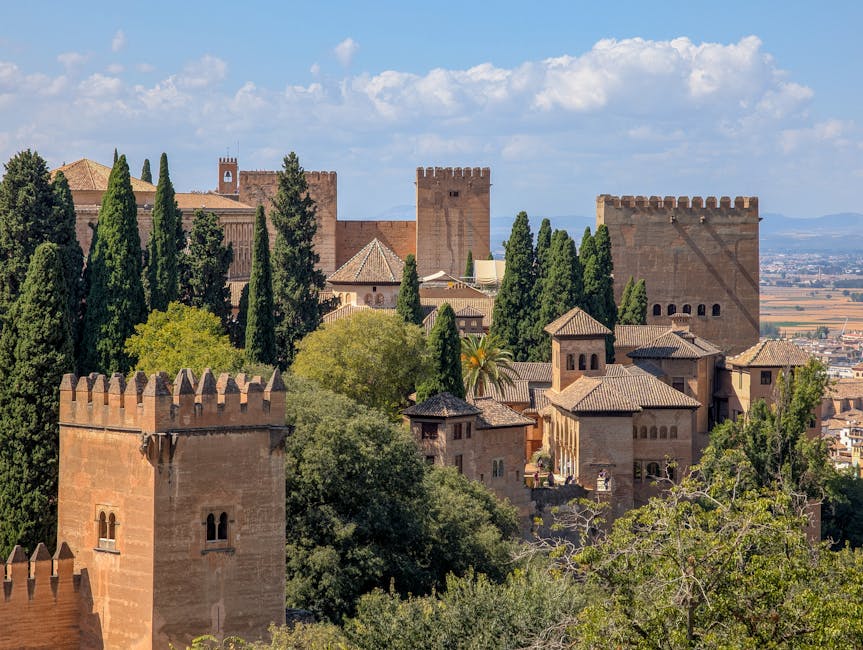
Many romantic legends suggest the Alhambra earned its name from the red glow it produces at sunset. However, "Alhambra" actually comes from the Arabic "Al-Qala'a al-Hamra," meaning "the red fortress." This name refers to the distinctive reddish color of the clay used in the outer walls, which becomes particularly visible in certain lighting conditions. The original builders mixed clay from the surrounding hills with other materials, creating the characteristic terracotta hue that has defined the structure for centuries. This practical naming convention reflects the straightforward approach Islamic architects took when describing their monumental works.
2. Construction Took Place on Top of Roman Ruins
Archaeological evidence reveals that the Alhambra's hilltop location, known as Sabika Hill, has been occupied since Roman times. Before the Nasrid dynasty began constructing the palace complex in the 13th century, the site held Roman fortifications and later Visigothic structures. When excavations have been conducted in various parts of the complex, researchers have discovered Roman coins, pottery, and architectural fragments. This layering of civilizations demonstrates how strategic locations in Spain were valued and reused throughout millennia of conquest and cultural change.
3. Advanced Hydraulic Engineering Powered an Elaborate Water System
Perhaps one of the Alhambra's most impressive yet underappreciated features is its sophisticated water management system. Medieval Islamic engineers designed an intricate network of channels, aqueducts, and fountains that brought water from the Darro River more than six kilometers away. This system not only supplied drinking water but also powered fountains, filled reflecting pools, and provided temperature control throughout the palace. The water flowed through underground channels using gravity alone, without pumps or mechanical assistance. The gentle sound of running water throughout the complex served both aesthetic and practical purposes, creating a cooling effect during hot Spanish summers while producing a calming acoustic environment.
4. Washington Irving Saved the Complex from Complete Ruin
By the 19th century, the Alhambra had fallen into severe disrepair. American writer Washington Irving lived in the abandoned palace in 1829 and subsequently published "Tales of the Alhambra," which romanticized the site and brought international attention to its deteriorating condition. His writings sparked European and American interest in preserving the complex, ultimately leading to restoration efforts that saved it from potential destruction. Irving's temporary residence in the Governor's apartments helped transform the Alhambra from a forgotten military garrison into a celebrated symbol of Spain's Islamic heritage.
5. Napoleon's Troops Nearly Destroyed the Entire Complex
During the Peninsular War in 1812, French troops occupying the Alhambra attempted to blow up the entire complex as they retreated from Spain. They planted explosives throughout the towers and walls, and several detonations successfully destroyed portions of the structure, including significant sections of the defensive walls and towers. The complex was only saved from total destruction when a disabled Spanish soldier, José García, managed to defuse the remaining charges. This act of courage preserved one of the world's greatest architectural achievements, though the damage from the successful explosions remains visible in certain areas today.
6. Mathematical Perfection Defines Every Surface
The geometric patterns adorning the Alhambra's walls, ceilings, and floors represent some of the most sophisticated mathematical artistry in the world. Islamic artisans used complex geometric principles to create tessellations that modern mathematicians still study. Remarkably, researchers have identified examples of 17 different "wallpaper groups" – mathematical classifications of repeating patterns – throughout the complex. These patterns weren't merely decorative; they reflected Islamic philosophical principles about the infinite nature of creation and the underlying mathematical order of the universe. Some patterns weren't formally described by Western mathematics until centuries after their creation at the Alhambra.
7. Secret Christian Symbols Were Added Immediately After the Conquest
When Catholic monarchs Ferdinand and Isabella conquered Granada in 1492, they immediately began inserting Christian symbols throughout the Islamic palace without destroying it entirely. Their coat of arms was carved into various locations, and subtle Christian iconography was incorporated into existing spaces. However, the monarchs recognized the palace's exceptional beauty and chose preservation over destruction, an unusual decision for the era. This choice created a unique architectural fusion where Islamic and Christian elements coexist, making the Alhambra a rare example of cultural preservation during a period typically characterized by the erasure of conquered civilizations' achievements.
8. The Palace Contained Its Own Mint and Weapons Factory
Beyond its role as a royal residence, the Alhambra functioned as a self-sufficient city-state. Within its walls, the complex housed a mint for producing currency, workshops for manufacturing weapons and armor, public baths, schools, and extensive residential quarters. Archaeological evidence shows that hundreds of people lived and worked within the fortress walls, creating a thriving community that could withstand extended sieges. The economic independence provided by these facilities made the Alhambra not just a symbolic seat of power but a genuine center of political and economic authority in the Nasrid kingdom.
9. Over 10,000 Individual Wooden Pieces Form the Dome Ceilings
The spectacular muqarnas (stalactite vaulting) ceilings in the Alhambra's most important halls represent masterpieces of woodworking and architectural planning. The ceiling of the Hall of the Abencerrajes contains more than 5,000 individual wooden pieces fitted together without nails, creating an eight-pointed star design that appears to float overhead. The Sala de los Reyes features even more complex ceiling work with over 10,000 pieces. These ceilings required years of precise craftsmanship and demonstrate the Nasrid dynasty's commitment to creating architectural elements that would inspire awe and communicate their power and sophistication to visitors and subjects alike.
10. Modern Conservation Requires Cutting-Edge Technology
Preserving the Alhambra presents unique challenges that have pushed conservation science forward. The delicate stucco work deteriorates from humidity, pollution, and the presence of millions of annual visitors. Contemporary conservators use laser scanning, 3D modeling, and climate control systems to monitor and protect the complex. Researchers employ non-invasive techniques like ground-penetrating radar to understand underlying structures without damaging original materials. The site now limits daily visitor numbers and uses specialized filtration systems to control air quality in enclosed spaces. These modern interventions ensure that future generations can experience the Alhambra's beauty while respecting the integrity of its 700-year-old construction methods and materials.
A Living Testament to Cultural Achievement
The Alhambra's surprising facts reveal a monument far more complex than its beautiful facades suggest. From its advanced engineering systems and mathematical sophistication to its narrow escapes from destruction and ongoing conservation challenges, the complex represents layers of human achievement, cultural exchange, and historical accident. These ten facts only scratch the surface of what makes the Alhambra extraordinary, reminding us that the world's greatest landmarks contain endless opportunities for discovery and wonder.