




















What is the primary function of a computer mouse?

1 / 20 Questions
0 Points

What is the primary function of a computer mouse?

To point and click

To type text

To print documents

To scan images

Points won
0
Correct score
0%

More Questions

More Articles

Did You Know These 12 Facts About the Pentagon?

Did You Know These 12 Facts About the Pentagon?

⏱️ 4 min read

Did You Know These 12 Facts About the Pentagon?

The Pentagon, serving as the headquarters of the United States Department of Defense, is one of the world's most recognizable buildings. This architectural marvel holds numerous fascinating secrets and remarkable features that many people might not know about. Here are twelve incredible facts about this iconic structure that showcase its unique characteristics and historical significance.

1. Record-Breaking Construction Speed

Despite its massive size, the Pentagon was constructed in an remarkably short time frame. Ground was broken on September 11, 1941, and the building was completed in just 16 months. The speed of construction was necessitated by the urgent requirements of World War II, making it one of the fastest-built large-scale projects in history.

2. Unique Shape Purpose

The Pentagon's distinctive five-sided design wasn't the original plan. The building was initially designed to fit on a different plot of land that had an irregular pentagonal shape. When the location changed, the design was kept because it allowed for the shortest walking distance between any two points in the building and proved ideal for efficient office space arrangement.

3. Twice the Size of the Empire State Building

The Pentagon is one of the world's largest office buildings, with approximately 6.5 million square feet of space. This makes it roughly twice the floor space of the Empire State Building. The building houses approximately 23,000 military and civilian employees and receives about 100,000 phone calls per day.

4. Segregation-Era Design

Built during the era of segregation, the Pentagon was originally constructed with twice the number of bathrooms needed, as racial segregation laws required separate facilities. When President Roosevelt issued an executive order banning racial discrimination in the federal workforce, the extra bathrooms became redundant but remained in place.

5. Self-Contained City

The Pentagon functions like a small city, featuring its own shopping mall, bank branches, food courts, and medical facilities. It also houses a impressive array of amenities including a pharmacy, post office, florist, and even a mini-mall called "Pentagon Row."

6. Corridor Length

The Pentagon contains 17.5 miles of corridors. To help people navigate this vast network, the building is divided into five wedges and five rings, with corridors designated by specific numbers and letters. It takes approximately seven minutes to walk between the furthest points of the building.

7. Window Count

The building features exactly 7,754 windows, which help provide natural light throughout the structure. During World War II, all these windows had to be blacked out at night to comply with wartime security measures, requiring a significant amount of dark curtain material.

8. Ground Zero Placement

During the Cold War, the Pentagon was intentionally positioned as "Ground Zero" for a nuclear attack. This strategic placement was meant to protect Washington, D.C., as Soviet missiles would likely detonate above the building, with the explosion's force being directed upward rather than outward toward the capital.

9. Renovation Timing

A major renovation project called "Pentagon Renovation Program" was underway when the September 11, 2001 attacks occurred. Remarkably, the section that was hit had just been renovated with new blast-resistant windows and walls, which helped limit the damage and save lives.

10. Environmental Features

Despite its age, the Pentagon has undergone various environmental upgrades. The building now features a green roof system, energy-efficient lighting, and water conservation measures. These improvements have helped reduce the facility's environmental impact and operating costs.

11. Hot Dog Stand Mystery

A hot dog stand in the Pentagon's central courtyard was nicknamed "Café Ground Zero" during the Cold War. Soviet intelligence allegedly believed it concealed a secret entrance to an underground command center, though it was actually just a regular concession stand.

12. Unique Address System

The Pentagon's internal address system is remarkably efficient. Any office can be located using a code that identifies its floor, ring, corridor number, and room number. This system allows people to navigate the massive building without getting lost, despite its complex layout.

Conclusion

The Pentagon stands as a testament to American engineering, military history, and architectural innovation. From its rapid construction to its unique design features and historical significance, these twelve facts demonstrate why the Pentagon remains one of the most fascinating buildings in the United States. Its combination of size, efficiency, and historical importance continues to make it a subject of interest for people worldwide.
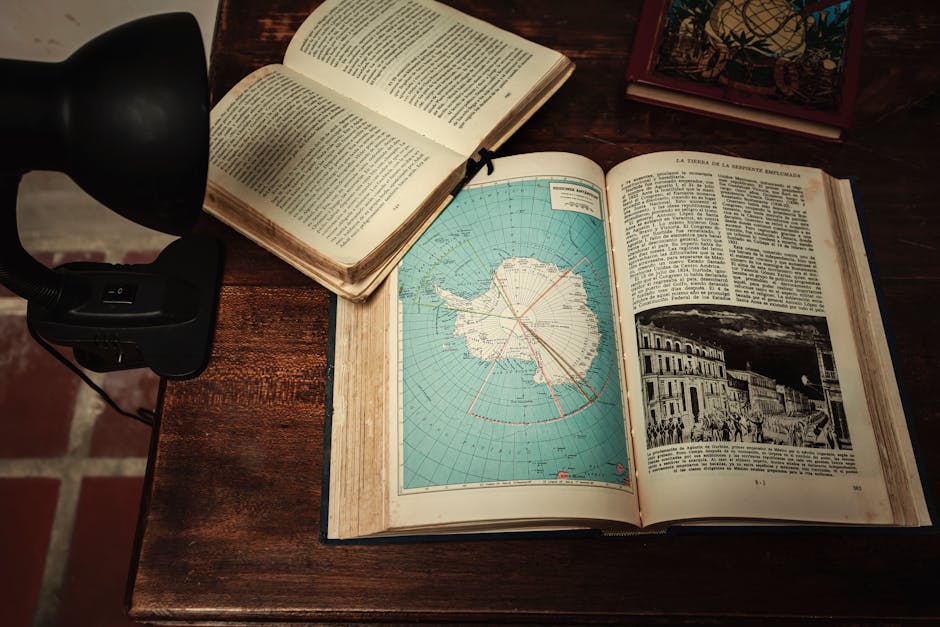
Top 10 Key Moments in Global Exploration History

Top 10 Key Moments in Global Exploration History

⏱️ 4 min read

Top 10 Key Moments in Global Exploration History

Throughout human history, exploration has driven progress, shaped civilizations, and expanded our understanding of the world. From ancient maritime voyages to modern space missions, these pivotal moments have redefined human capabilities and knowledge. Here are ten transformative moments that changed the course of exploration history.

1. The Phoenician Circumnavigation of Africa (600 BCE)

Under the commission of Egyptian Pharaoh Necho II, Phoenician sailors completed the first known circumnavigation of Africa. This three-year journey proved that Africa was surrounded by water and established important maritime trade routes. The expedition demonstrated advanced navigation skills and ship-building techniques of the ancient world.

2. Marco Polo's Journey to China (1271-1295)

Marco Polo's epic 24-year journey along the Silk Road opened Western eyes to Eastern civilization. His detailed accounts of China under Kublai Khan's rule, documented in "The Travels of Marco Polo," introduced Europeans to Asian cultures, technologies, and trade possibilities. This journey catalyzed centuries of East-West exchange and inspired future explorers.

3. Zheng He's Treasure Voyages (1405-1433)

Chinese admiral Zheng He led seven massive naval expeditions throughout the Indian Ocean, reaching as far as East Africa. His fleet of hundreds of ships, some being the largest wooden vessels ever built, demonstrated China's naval superiority and established diplomatic relations across Asia and Africa. These voyages represented the peak of Chinese maritime exploration.

4. Christopher Columbus's Atlantic Crossing (1492)

Columbus's first voyage across the Atlantic Ocean initiated sustained contact between Europe and the Americas. While seeking a western route to Asia, his expedition accidentally discovered the New World, leading to the Columbian Exchange and fundamentally altering the course of global history. This journey marked the beginning of the Age of Discovery.

5. Vasco da Gama's Route to India (1497-1499)

The Portuguese explorer's successful navigation around Africa to reach India established the first direct sea route between Europe and Asia. This achievement revolutionized international trade, broke the Venetian and Arab monopoly on Asian trade goods, and laid the foundation for European maritime empires.

6. Ferdinand Magellan's Circumnavigation (1519-1522)

Though Magellan himself did not survive the journey, his expedition completed the first circumnavigation of the globe. This voyage proved conclusively that the Earth was round, discovered the Pacific Ocean, and revealed the true size of the planet. It stands as one of the greatest achievements in maritime history.

7. James Cook's Pacific Voyages (1768-1779)

Cook's three major voyages mapped vast areas of the Pacific Ocean, making first European contact with numerous island cultures and the eastern coast of Australia. His expeditions combined exploration with scientific observation, setting new standards for maritime research and cartography. His detailed maps and journals significantly advanced naval navigation.

8. Lewis and Clark Expedition (1804-1806)

The Corps of Discovery Expedition, led by Meriwether Lewis and William Clark, completed the first American overland expedition to the Pacific coast. This journey mapped the Louisiana Purchase, documented hundreds of new species, and established relations with Native American tribes. Their detailed journals provided vital information for American westward expansion.

9. First Summit of Mount Everest (1953)

Edmund Hillary and Tenzing Norgay became the first climbers to reach Earth's highest point, marking a milestone in mountaineering history. Their success on Mount Everest demonstrated the limits of human endurance and technical climbing ability, inspiring generations of mountaineers and establishing Nepal as a premier destination for high-altitude climbing.

10. Apollo 11 Moon Landing (1969)

The successful landing of humans on the Moon represented humanity's greatest exploration achievement. Neil Armstrong and Buzz Aldrin's lunar walk proved that human exploration could extend beyond Earth, ushering in the space age and demonstrating unprecedented technological capabilities. This mission fulfilled President Kennedy's challenge and marked the peak of the Space Race.

Conclusion

These ten pivotal moments in exploration history represent humanity's enduring drive to push boundaries and discover the unknown. From ancient maritime journeys to space exploration, each achievement built upon previous successes and inspired future generations. These explorations not only expanded geographical knowledge but also advanced technology, cultural exchange, and scientific understanding. Their legacy continues to influence modern exploration efforts, from deep-sea research to interplanetary missions.

Together, these moments illustrate how human curiosity, courage, and innovation have consistently overcome seemingly impossible challenges, redefining what we believe possible and constantly pushing the boundaries of human achievement. As we look to future frontiers in space exploration and deep-sea discovery, these historic achievements remind us of humanity's remarkable capacity for exploration and discovery.